The smarter technology becomes, the more we must rely on human intuition
Koert van MensvoortWe surround ourselves with increasingly intelligent technology, yet understand it less and less. For centuries, inventions gave us more control: writing helped us store our thoughts, the printing press spread knowledge and strengthened our belief that reality could be understood.
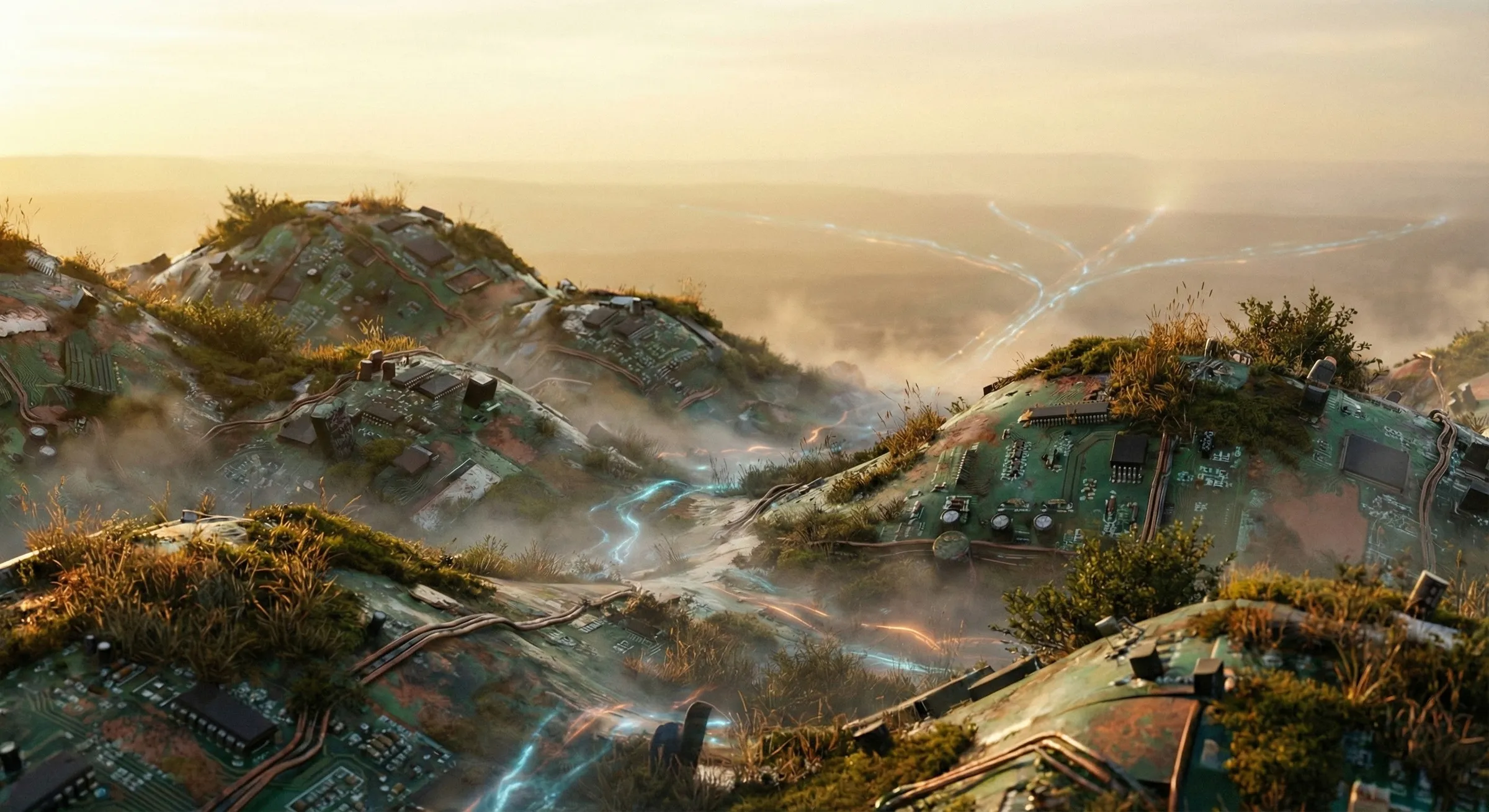
Knowledge is power. Whoever knows the world can master it. That idea shaped the Enlightenment, industrialization and digitization: technology as an order-creating force meant to free us from the whims of nature. But paradoxically, the world now feels less comprehensible than ever. Technology has become so complex and omnipresent that it no longer feels like a tool, but like a landscape we move through. We see the systems, but we no longer understand them. Our sense of crisis does not arise from a single threat, but from a loss of grip.
That also touches on who we are as humans. We distinguish ourselves from other animals through our neocortex: the part of the brain with which we plan, reason, anticipate — and worry. A beautiful piece of evolution, yet that very capacity is now partly overtaken by AI, which analyzes faster than we can keep up. Where the Industrial Revolution made our muscle power redundant, the AI revolution is outsourcing our cognitive work.
Confusing? Certainly. And this is only the beginning. Because the quantum computer is coming. It doesn’t just calculate faster — it calculates differently: not one outcome, but countless possibilities at once. Not certainty, but probability. Much of what we call “understanding” relies on predictability. Quantum shows that nature itself is open and multiple.
In a world without fixed certainties, insight becomes more important than knowledge.
Superposition and entanglement are not mistakes but foundations. Still following? Physicist Richard Feynman put it bluntly: “If you think you understand quantum mechanics, you do not understand quantum mechanics.” And if even nature’s foundations are inscrutable, perhaps we do not need to understand every detail of the world either.
Max Weber once described the modern world as “disenchanted”: everything had to be measurable, explainable and controllable. But that worldview is starting to wobble. Quantum, AI and complex technologies lead us away from control and toward navigating constant change. In Taoism this is called wu wei: acting without forcing, moving with the flow without losing direction.
We are living in an early age. We are the primitives of a new nature we have created ourselves, yet no longer control. Perhaps this era does not ask us to understand and manage everything, but to choose which values guide us when understanding falls short. Technology grows ever smarter; the question is whether we dare to grow wiser.
Comments (0)
Share your thoughts and join the technology debate!
No comments yet
Be the first to share your thoughts!