Timeless futuristic
Kirsten HannemaIn 1961, the year that then US President J.F. Kennedy expressed his wish to put a man on the moon ‘before this decade is over,’ Philips presented the plan to land a ‘spaceship’ in Eindhoven as an education center on the evolution of technology: the Evoluon.
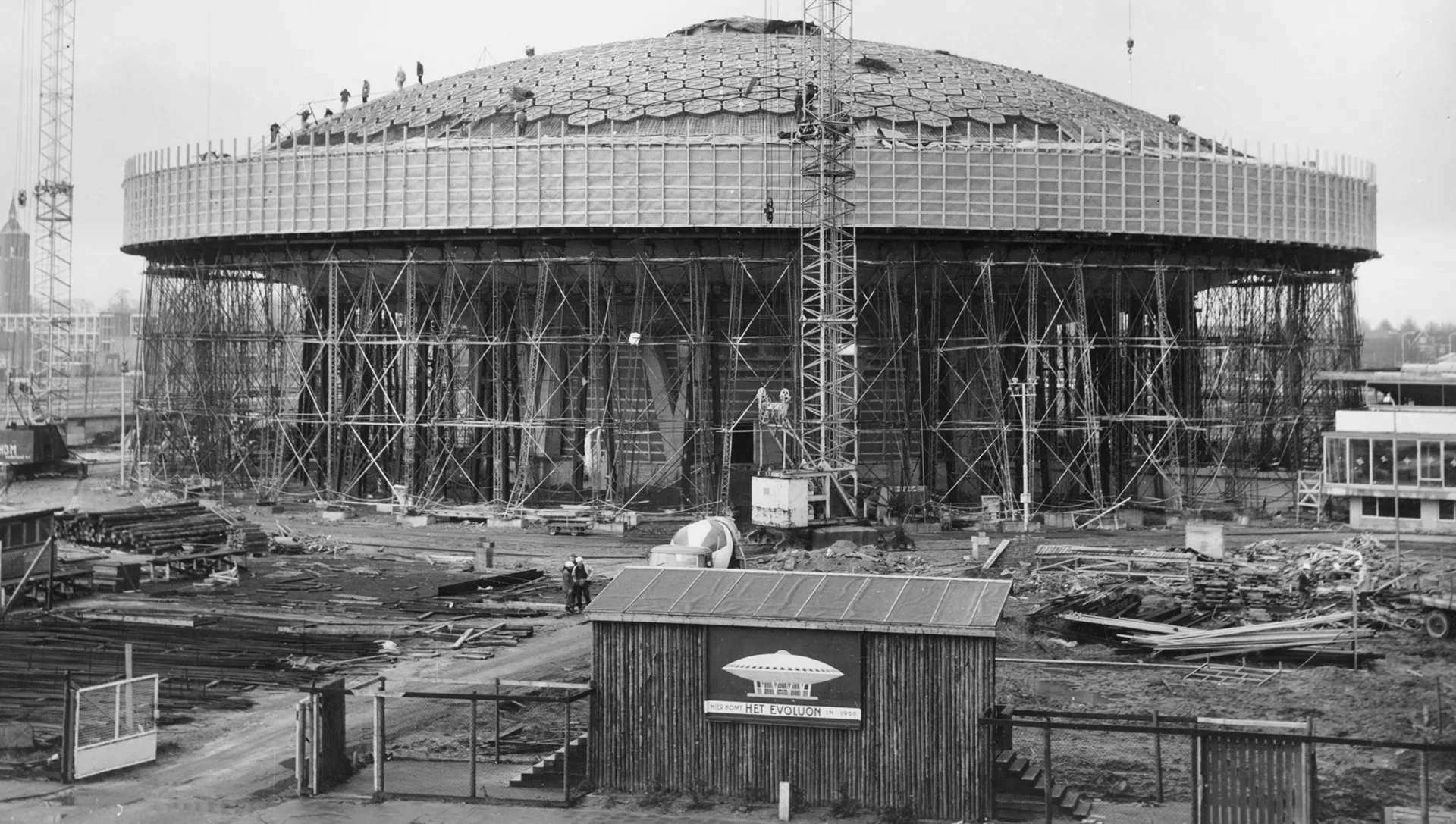
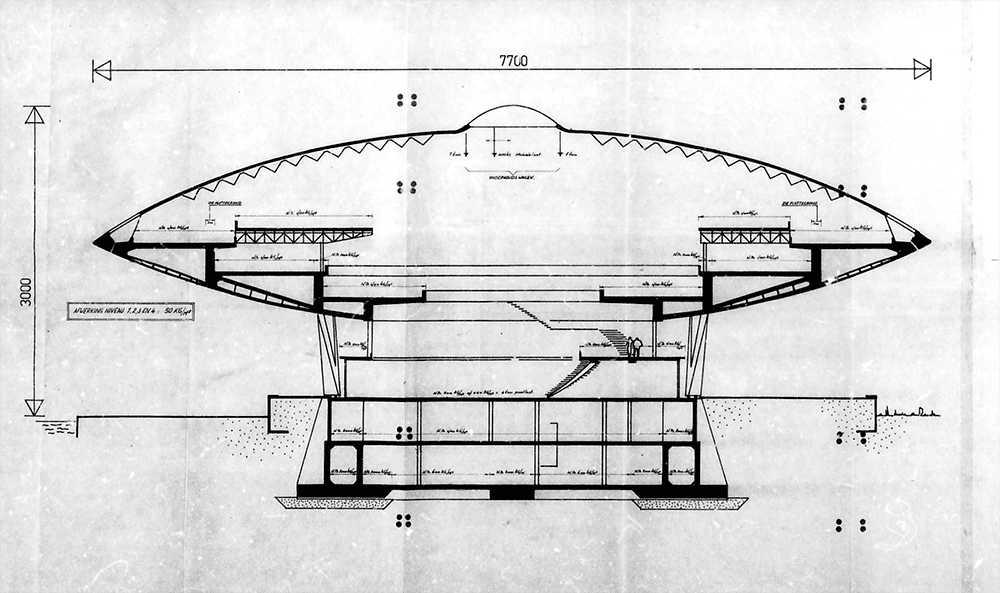
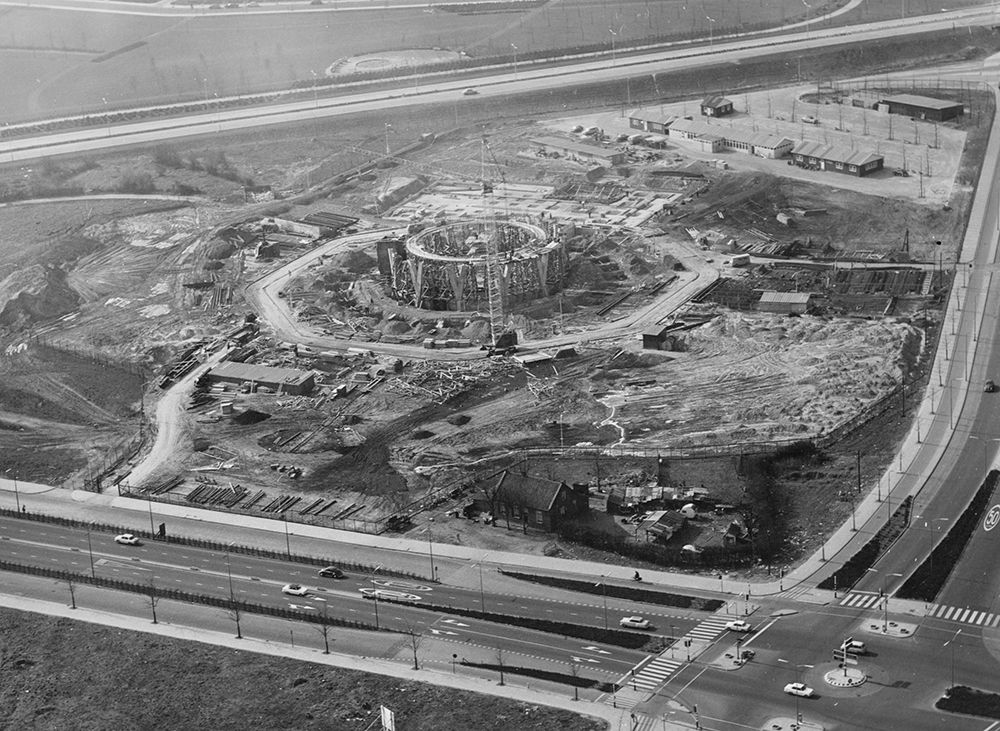
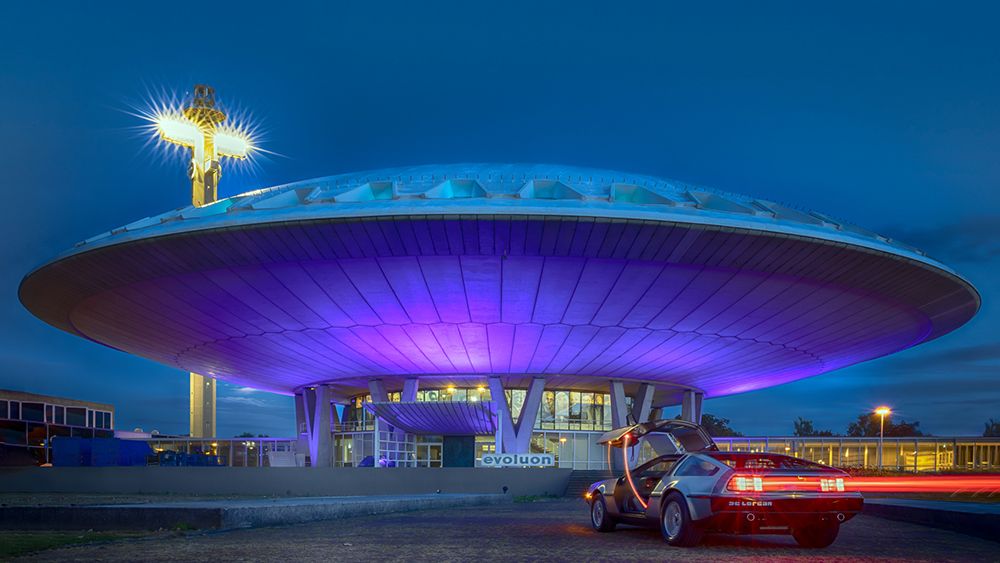
In 1966 - three years before Neil Armstrong became the first to step on the moon - the building, resting on twelve V-shaped columns, opened. With a diameter of 77 meters, it is the largest dome structure in the Netherlands, constructed from state-of-the-art materials such as concrete and synthetics.
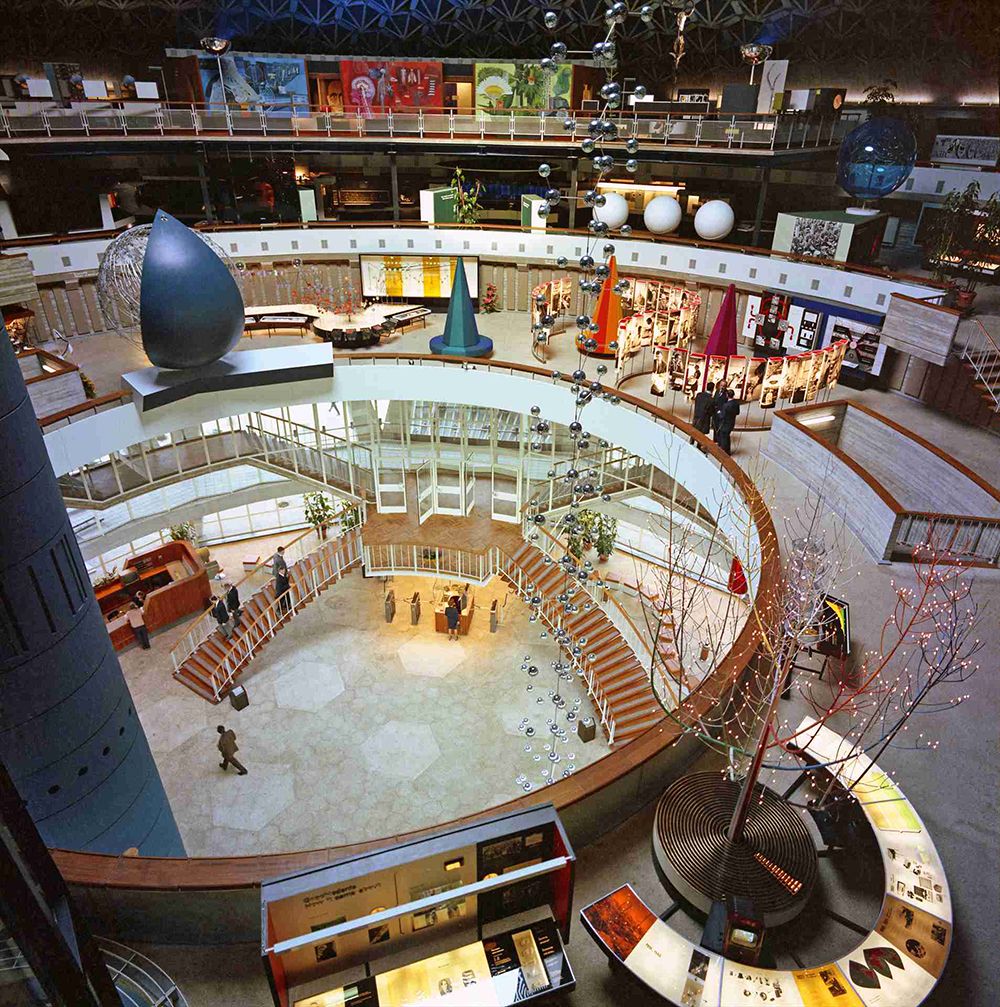
‘No ribbon, no scissors; the building was opened electronically by Prince Bernhard!’ the Polygoon newsreel reported at the time. Inside, visitors marveled at the technical wonderland of telephony, television, and artificial lighting. Through play, they could discover how these new inventions worked, and how a steam engine or gasoline engine is put together.
60 years later, the Evoluon still looks progressive. And with its repurposing as the Next Nature Museum, it offers a renewed perspective on the future and the relationship between humans, nature, and technology. What is the secret of this timelessly futuristic design?
Form Follows Function
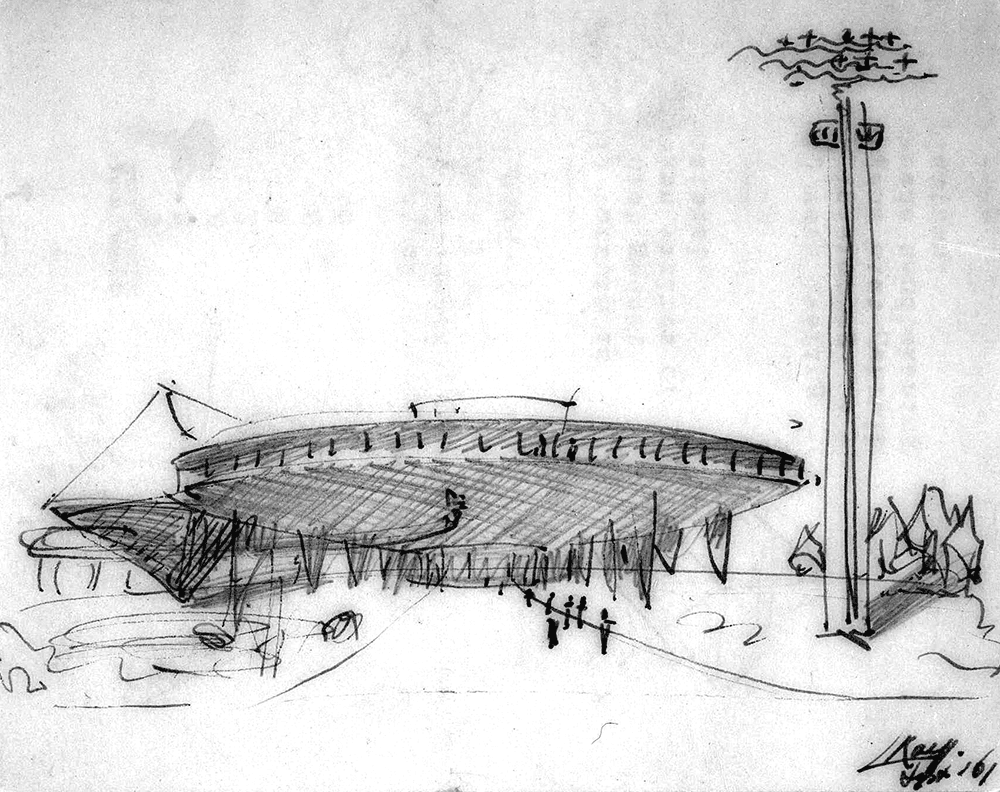
For the answer, we must go back to 1958, when Philips presented a groundbreaking pavilion at the World's Fair in Brussels, designed by the world-famous Franco-Swiss architect Le Corbusier and Yannis Xenakis. However, the idea came from architect Louis Kalff, who was Director of Artistic Affairs at Philips; he wanted to showcase the company's capabilities in the fields of lighting, acoustics, and electrical engineering.
The pavilion was a great success, prompting the idea to build a permanent exhibition space in Eindhoven. Philips' 75th anniversary provided a fitting occasion; the company decided to present the project to the city as a gift. Kalff created the design together with Eindhoven architect Leo de Bever. Following the modernist motto ‘form follows function,’ they designed a flying saucer that transports the visitor to future worlds. The design was the first Dutch example of Futurism in architecture: an international movement that expressed progress and new technology.
Technical masterpiece
In terms of materials and construction techniques, the Evoluon was far ahead of its time. It presented the builders with quite a few headaches: how do you make something that has never been built before? Initially, they wanted to construct the entire flying saucer from cast-in-place concrete. That was no problem for the lower half, but the upper half would be too heavy. It was proposed to make it out of steel, but director Frits Philips felt that his company could not present a construction ‘from the time of the Eiffel Tower’.
Through calculation and drawing, the engineers arrived at an ingenious solution: a roof composed of 822 hexagonal lightweight concrete panels, held together by an enormous tensioned steel cable in the outer rim. Inside, the dome was finished with wood; outside with matte white plastic. For the door handles, Kalff had specially enameled ceramics made, featuring the Evoluon logo.
New Meaning
The building grew into a symbol for the design city of Eindhoven and - as a regular destination for school trips - became part of the collective memory. When the museum closed in 1989, it had attracted ten million visitors. In the years that followed, it was less successful as a convention center and event venue, prompting Philips to launch the ‘A New Future for the Evoluon’ process to give the building a second life as a center for technology, design, and education. To this end, it was sold to a consortium of project developers. During the same period, the building was declared a National Monument.
Over the past three years, the Evoluon has been transformed into the Next Nature Museum, the Netherlands’ museum of the future. The essence of the building has been preserved, while it has been given renewed meaning. After all, technology today is no longer a vision of the future, but deeply interwoven with our daily lives: a second nature. At the same time, major societal issues such as climate adaptation, an aging population, and the energy transition call for new techniques and solutions. In the year that humanity made a manned flight around the moon with the Artemis II mission – and we saw images of the far side of the moon for the first time – the Evoluon invites us to look at our living environment with a fresh perspective. Aboard the spaceship, you are taken through exhibitions, installations, and public programs that show what the future might look like and encourage reflection. Where are we heading as a society, and what kind of world do we want to build together?
About Kirsten Hannema
After studying Architecture, Kirsten Hannema began her career as an architect, but has focused entirely on writing about architecture since 2005. She has been writing for de Volkskrant since 2007. Hannema was editor-in-chief of the Yearbook Architecture in the Netherlands, contributes to various architecture publications, and is a regular jury member for architecture awards.
Comments (0)
Share your thoughts and join the technology debate!
No comments yet
Be the first to share your thoughts!