Robots take over
Koert van Mensvoort
25 July 2026
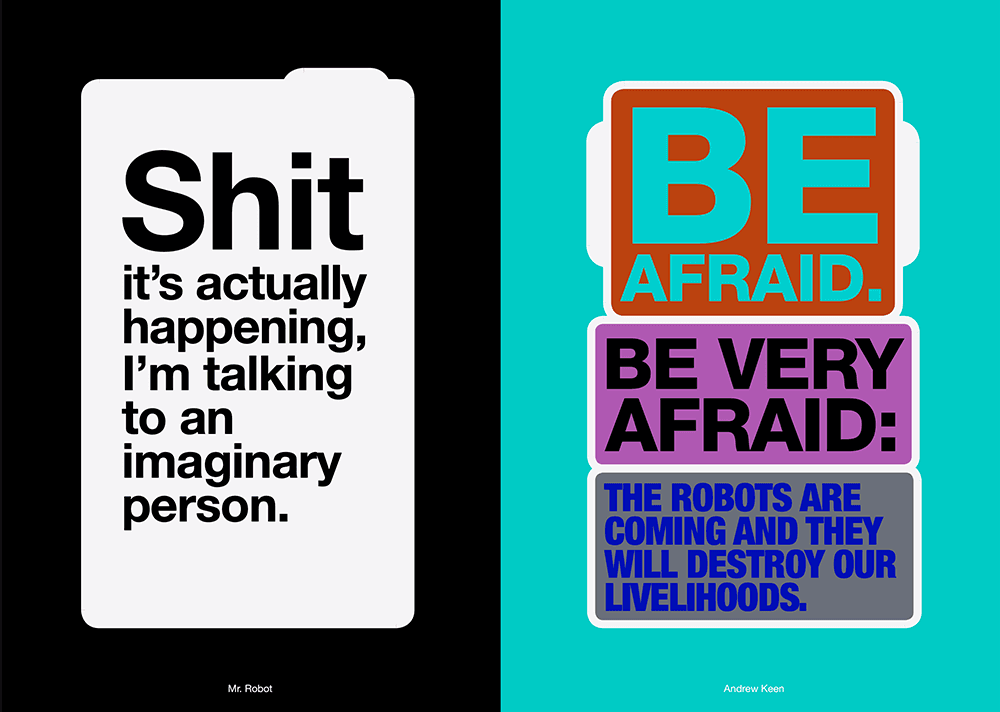
The robots are coming! They’re getting stronger and smarter every day. How long will I have my job before a robot steals it? And they’re taking over our families, our houses, our cars… basically, our whole lives.
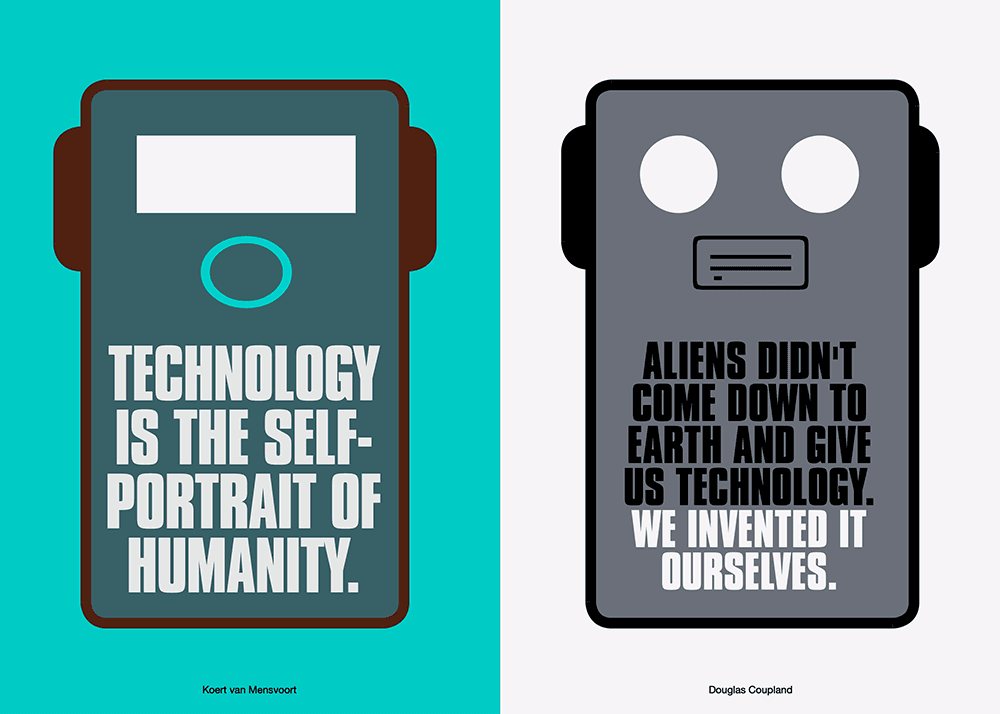
Visions of the future in which people are dominated by superior machines have always been with us. Sometimes they turn us into human livestock; in other scenarios, our appliances actively try to exterminate us. Though Hollywood movies usually depict robots as metal people, the reality is more subtle than that.
For decades, robotisation has been used widely to accomplish work that used to be done by people. The industrial revolution rendered human brawn redundant; now the digital revolution is computerising cognition. This development is not only taking work off our hands, it is changing our very nature. After all, highly productive, precisely functioning machines require highly productive, precisely functioning people. As a side effect of standardisation, mass production, computerisation, bureaucracy and globalisation, human beings have been robotised to an advanced degree.
Why would we become robots when we already have robots?
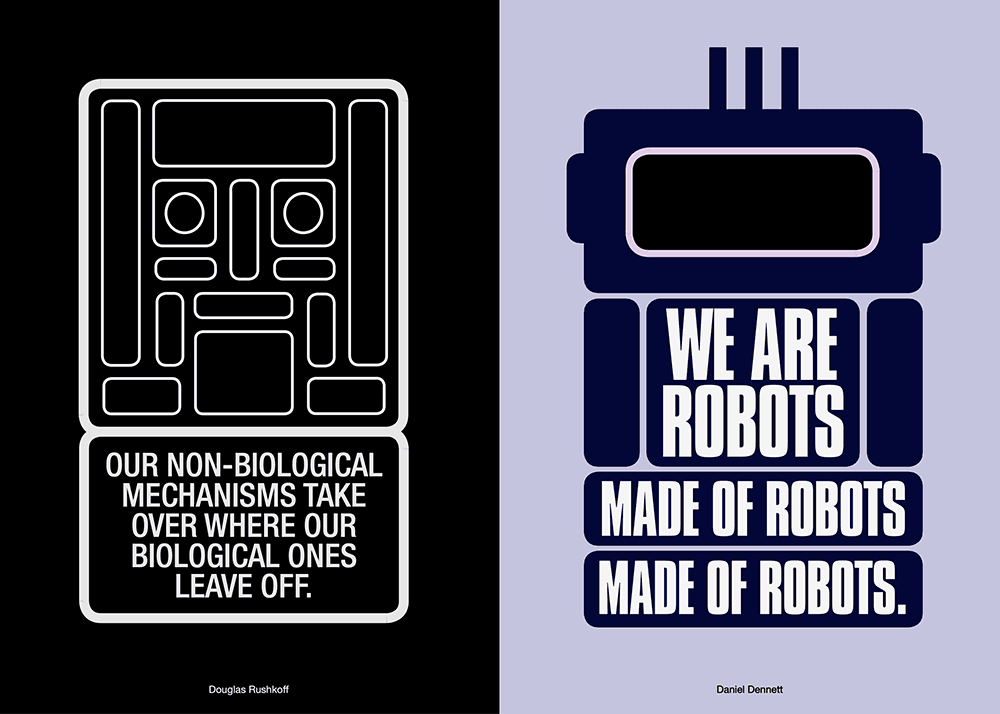
While we wait for the day when a humanoid robot will shake our hand and introduce itself as an artificial intelligence, the machine has long since grown around us: we are living inside the robot. Our life is a programme, one we run every day. Agreements and rules ensure that order is upheld; people live according to norms. We get up when the alarm goes off and go to our jobs by car or metro. When we’re ill, we get better, and we leave as little as possible to the vagaries of the day. We live in a safe environment and know our duties and responsibilities. Human beings are creatures of the system who follow recognisable trends and satisfy needs developed within set frameworks. We live in patterns, like robots.
The unexpected takeover
It’s odd that we worry about cyber implants and complex genetic engineering technologies robbing us of our humanity when there are much simpler ways of becoming inhuman. It has to be said: sometimes it seems as if it’s the people who are best at imitating systems who get awarded the highest social positions. The robots are taking over in an unexpected way.
Why is the relationship between people and machines always painted as a confrontation, never a collaboration? For instance, look at chess competitions. In the 1990s, the machine was supposed to prove its intelligence by beating a human being at the game. It succeeded and these days, a grandmaster can’t even win against his own phone. But we also realise that chess is a limited game that illuminates intelligence in a one-sided way. There’s so much more to human beings than that.
Human and machine
How ridiculous would it be if we staged competitions between people and horses to see which of them could run faster? People on horses make for a more interesting outcome. There are differences between cognition and calculation. So let’s recognise that robots aren’t the same as people. Rather, they’re a new species, with which we can coexist on earth just as we do with other plants and animals. Why would we become robots when we already have robots? It will be better if people and machines work together to build a better world.
Comments (0)
Share your thoughts and join the technology debate!
No comments yet
Be the first to share your thoughts!