Technology vs Football: 4-4
Ties van de WerffSome matches remain interesting, even though they're predictable. Take the continuous battle between technology and football. Every time the stakes get high, such as at the World Championship, the debate is reopened.
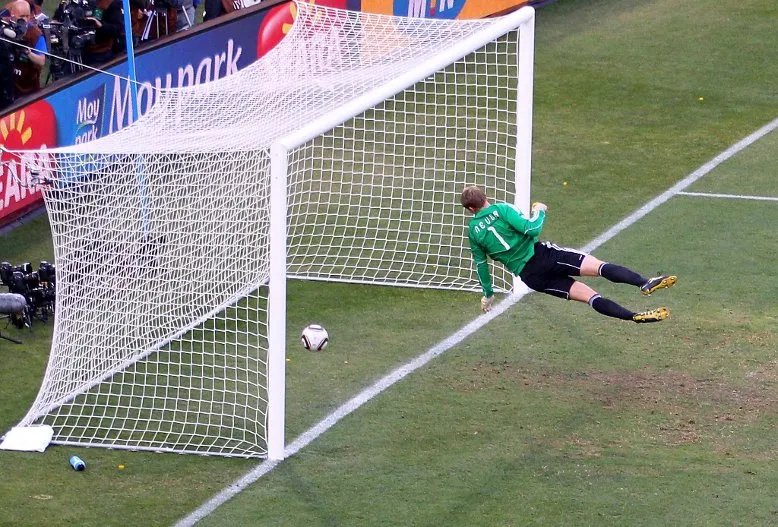
Since the mistakenly denied goal of Engeland – Lampard’s shot bounced down from the crossbar over the goal line – the heat is on in football land. The error of the referee created fury all over the world, and brought the issue of technology and football again on the agenda of FIFA. Last week, FIFA announced that they will reconsider goal-line technologies.
A couple of these technologies have been rejected by FIFA in the past years. In 1999, a proposal by the Football League to install cameras in goalposts was discarded. In 2007, FIFA experimented with the ‘smartball’ (a micro-chipped ball) and the HawkEye System (cameras that would send the position of the ball to the referee), but both got suspended because they faced technical difficulties. FIFA voted instead for adding extra referees. Just last March, after a similar vote, FIFA tried to kill the debate by announcing that "This is an end to the potential use of technology within football." It lasted for two months.
Would goal-line technology ‘kill football’ as some suggest? How much technology can a game based on human skill and chance endure? And to what extent are referees part of the game? Football and technology are already intertwined: the endless camera viewpoints and slow motion stills, the referees with headsets, the tweaked football shoes. Is goal-line technology so much different? Would we rather accept a failing micro-chip than a tired referee? And who is easier to blame: a referee that takes sides, or a cleverly hacked football?

Comments (0)
Share your thoughts and join the technology debate!
No comments yet
Be the first to share your thoughts!